
nostalgia, revisited
where do you begin?
“Why do you do it?” she had asked me, in her last attempt at dissuading me from doing the MFA. “It seems to cause you so much pain.” And I suppose that was one way to look at it, to interpret what I must have looked like every time the curtain went down in a dark theater at the end of a show. The thick feeling in my throat that translated into anguish on my face, glistening eyes on the brink of an overflow. I saw a picture of myself once, a photo another student EP had taken after our theater board’s undergraduate production of Merrily. To a stranger, I must have looked like I was absolutely losing my shit for no reason. Which is true. There’s no reason where the stage is involved, I think. That’s what’s so compelling about it.
As a kid, I used to bawl for hours in the car after leaving the movie theater. The whiplash of being abruptly moved from one world to another made my head hurt, and I didn’t want to accept that what I had watched wasn’t real. But mostly, I cried because it was, as in, it was real, the world had become as good as real, because what you see and take in, you can’t take back, and it made my head hurt and my chest ache and everything felt so good and so sad at the same time. And of course, I didn’t have the words for all that at the time, so I just cried.
I suppose moments like those paved the way my life was going to unfold in the next five, ten years that followed. How I blazed off, tried to do other things, tried to make something real in real life. Thought I was a part of something. Thought I wanted it, too. Until I didn’t. So I came back. If I didn’t have the stage, the screen, the rise and the fall, the tears of work and the tears of joy, of a world made if just for a moment, I didn’t stand a chance at anything at all. I had to be there. I had to make it real. I had to try. Even, and especially because, I knew it would always end. It was the only way I knew how to live.
And so, I came back. No, I was brought back. The story brought me back here. The curtain is still up. It isn’t done yet.
(taking a stab at an untitled-fiction-manuscript-in-progress)
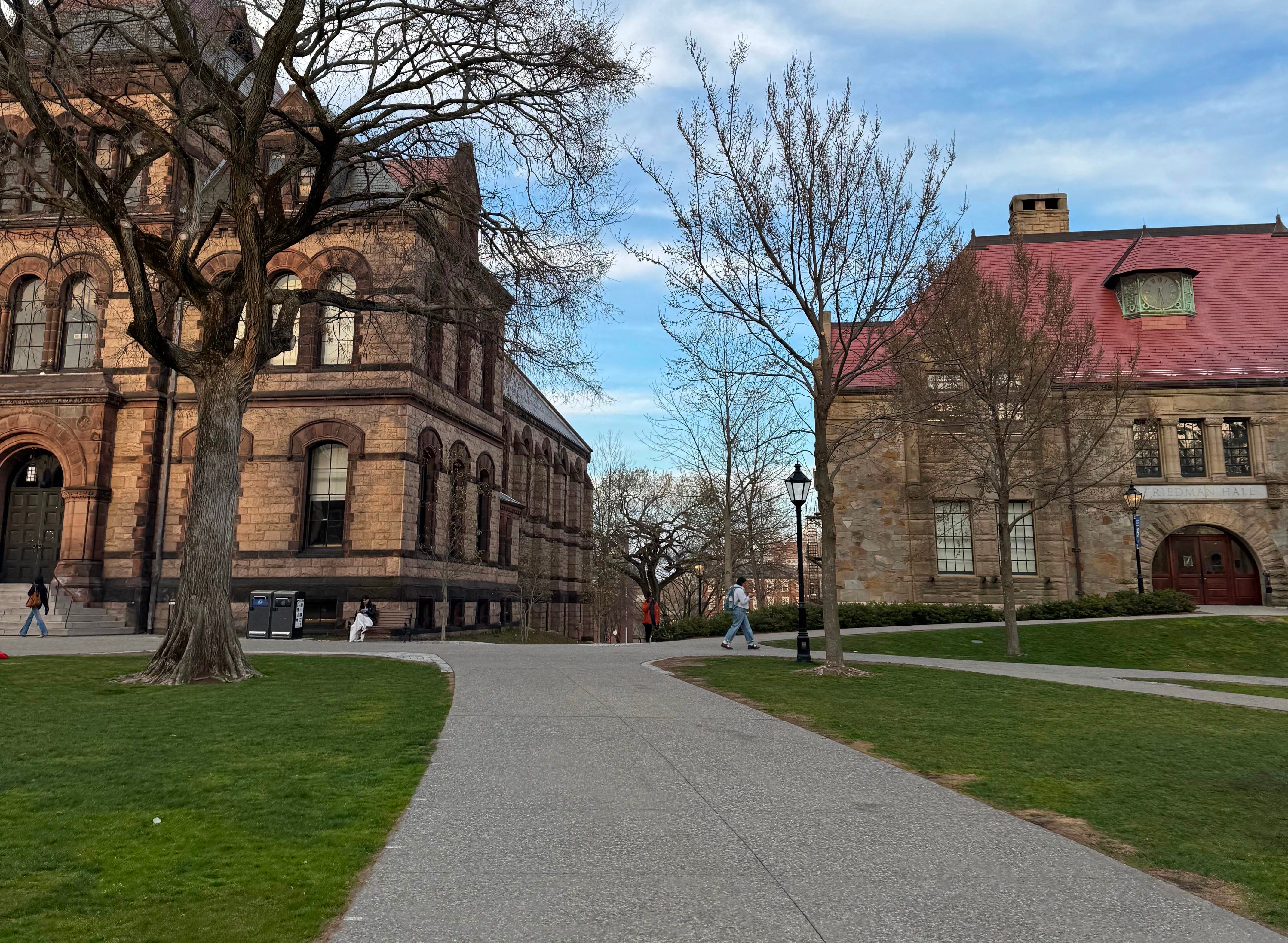
I was at my undergraduate campus for a conference on nostalgia. Rolling past University Hall with my suitcase, it felt as though I had never been gone, until I had to wait to be let into Friedman because I didn’t have a student ID.
As one of the student presenters at the conference informs us, “nostalgia” was first coined by Swiss physician Johannes Hofer, who combined the Greek roots nostos (homecoming) and algos (pain), to diagnose the psychic-physical affliction he perceived and sought to articulate among Swiss mercenaries away from Switzerland. A psychological illness with physical consequences. This term, nostalgia, has spilled over out of that context since.
My paper interpreted nostalgia through the racial politics, via the casting choices, of the 2022 film Mr. Malcolm’s List. “Racial representation and revisionist fantasy,” I declared through the title, as themes my presentation would address. Or, in other words, what other histories are being made materially real, visually possible, through non-white play in European period dress and narrative aesthetics? How do they both uphold and unsettle/reveal the instability of the modern historical narrative of race and human history?
nostalgia as a way of telling a story about the past that narrates the failures/limits of modern culture, while motioning to a future narrated through the multivocality of the past (scribbed furiously into my notes during our respondent’s remarks)
It’s an invention of fantasy, I say in other words, but it’s also an interpretation of history. And these performances, these stages, these settings, as banal and unserious as we might regard some of them, affect our imaginations of what societies are possible—and shape why the things we want might look the ways they do.
A week prior at the Association for Asian American Studies, the respondent to our roundtable on theorizing race, a professor in the field we greatly admire, tells me that my paper on varied approaches to Asian American literature reminded her of Eve Tuck’s work on thirding the binary, via Edward Soja. I take notes as quickly as I can while she speaks.
resistance reproduces what it resists
Eve Tuck’s thirding the binary thru desire—seems to resonate w/ my invocation of play
—participating in unequal social realities
—does desire resonate for you [me]?
—& answer my own question? what constitutions of race & gender can/might emerge thru play?
“It all began with desire,” I respond, as in, this project, this series of conference papers through which I am working out these burgeoning theories about pleasure and play and worldbuilding blurring fantasy and the quote-unquote real world, “when I saw the Wicked movie.” What I don’t say, what I’m unable to say, in a way, whether due to the environment of the conference room or the lack of words sufficient for it, is that I cried watching the “Defying Gravity” sequence in the theater, feeling the physical pain of my own wounds in that particular moment of my life, compounded by the presence, I realize, Elphaba has had in my life since I was a child singing “The Wizard and I” at the fourth grade talent show in Montgomery County, Maryland, or watching Mandy Gonzalez from a balcony seat inside the Gershwin Theatre on Broadway as a preteen who hasn’t realized yet that the blurriness of her vision means she desperately needs glasses. Or listening, over and over again, to the Wicked soundtrack on the CD player I kept in my room (my own room! for the first time ever, which was one perk about moving to the Midwest) on the first floor of our house near Fort Riley, Kansas, playing parts and imagining scenes in the privacy behind my closed door, an Ozian haven amidst this move to a place that didn’t feel like home. Yet it was, it had to be, and so. And it is, now, when I look back, by sheer recollection of the photos, and the documents, and the memories. The facts, and so, the feelings.
What happens, a friend of mine suggests in her work (I’m paraphrasing), when biblical studies generatively considers reception, retelling, adaptation, as doing scriptural/scripturalizing? work, in ways as impactful as, if not more than, in other ways, adhering to the canon? How is a canon constructed, in other words, and what influences our interpretations of its, perpetually constructed, objectivity?
Play, I propose in my paper on Asian American literature, “occurs through the pastiching of concepts, tropes, and materials, the suturing of hitherto separate objects. Of competing or contradictory ideologies. Of different epistemic matter.”
Pastiching/interpretation/adaptation/fanfiction. Such exercises involve an irreverence to existing traditions, which happens precisely through our feelings of attachment toward them. We wouldn’t be spending time with these things if we didn’t care.
“Play may not be intentional. It may or may not appear resistant, nor may that be the goal. At its best, play might be enjoyable. It is also a term that potentially includes, in the same conversation, the serious and the banal, the committed and the lackluster. It may not be satisfying. It may not feel agreeable.”
So.